

Blog
Hydrangea Help: What to Do When Blooms Fade, Flop, or Fail
Jul
Hydrangeas are summer favorites, but they do not always behave the way gardeners expect. Blooms may turn brown, heavy flower heads can droop after rain, or a healthy-looking plant may produce plenty of leaves but very few flowers. In most cases, the plant is not failing. It may simply need better watering, support, or a little patience.
When Blooms Begin to Fade
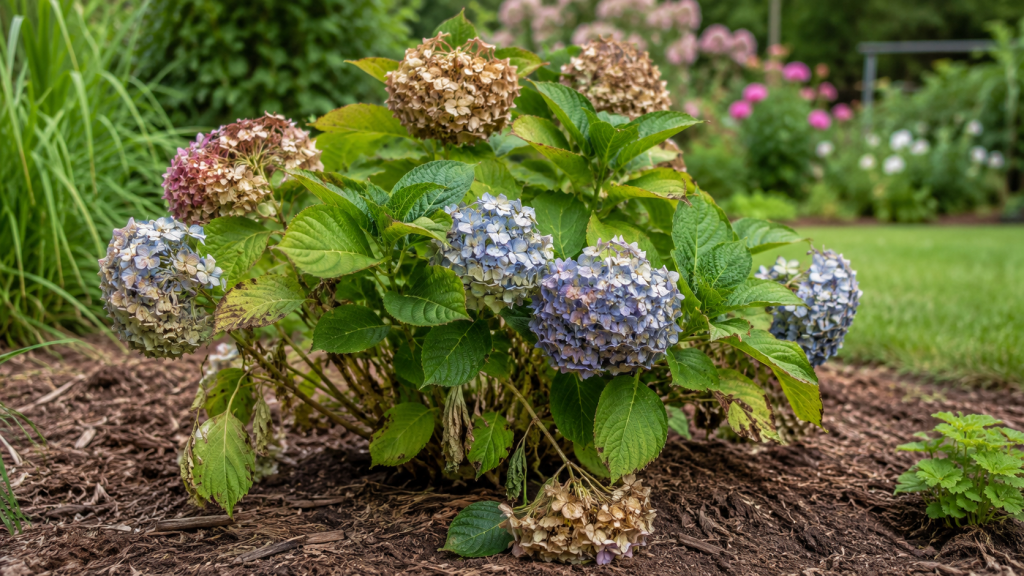
Hydrangea flowers naturally change color and dry as they age. Faded blooms can be removed to improve the plant’s appearance, but deadheading is optional and will not usually cause the plant to produce another full round of flowers.
To deadhead, cut the spent flower just above the first healthy set of leaves. Avoid cutting farther down the stem unless you know which type of hydrangea you have. Some varieties form next year’s flower buds on older stems, so aggressive summer or fall pruning can remove future blooms.
Why Hydrangea Flowers Flop
Large hydrangea blooms often bend after heavy rain because the flower heads hold a surprising amount of water. Newly planted hydrangeas may also have softer stems until their root systems become established.
Gently shake excess water from the flowers after a storm and support heavily loaded branches with discreet stakes or plant rings. As the plant matures, its stems often become stronger. Panicle hydrangeas can also be lightly pruned in late winter or early spring to encourage sturdier growth.
Water Deeply, Not Just Frequently
Hydrangeas are quick to wilt during hot weather, especially when planted in afternoon sun. A wilted plant does not always mean the soil is dry, so check the soil before watering. Temporary afternoon wilting is common, but a plant that remains droopy in the evening usually needs moisture.
Water deeply at the base of the plant so the root zone is thoroughly soaked. A two- to three-inch layer of mulch will help keep the soil evenly moist and protect the roots from summer heat.
Why Some Hydrangeas Do Not Bloom
A lack of flowers can have several causes. Late spring frost may damage developing buds, too much shade can reduce flowering, and excessive nitrogen fertilizer may encourage leaves instead of blooms. The most common problem, however, is pruning at the wrong time.
Bigleaf and oakleaf hydrangeas generally bloom on older wood, while panicle and smooth hydrangeas bloom on new growth. Before reaching for the pruners, identify your hydrangea and confirm when it should be trimmed.
Hydrangeas are generally resilient plants. With consistent watering, careful pruning, and the right amount of light, most will recover and reward you with dependable summer color for years to come.