

Blog
Late-Summer Color That Can Handle the Heat
Jul
By late summer, many gardens and containers begin to look tired. Spring annuals may be stretched, summer flowers can slow down, and a few empty spots may appear where plants struggled through heat or inconsistent watering. The good news is that the gardening season is far from over. With a few heat-tolerant plants and a simple container refresh, you can restore strong color that lasts well into fall.
Heat-Loving Annuals
Some annuals perform their best during the hottest part of the season. Angelonia, lantana, vinca, celosia, pentas, salvia, and zinnias continue blooming through warm days with relatively little maintenance. These are excellent choices for filling gaps in flower beds or replacing annuals that have faded.
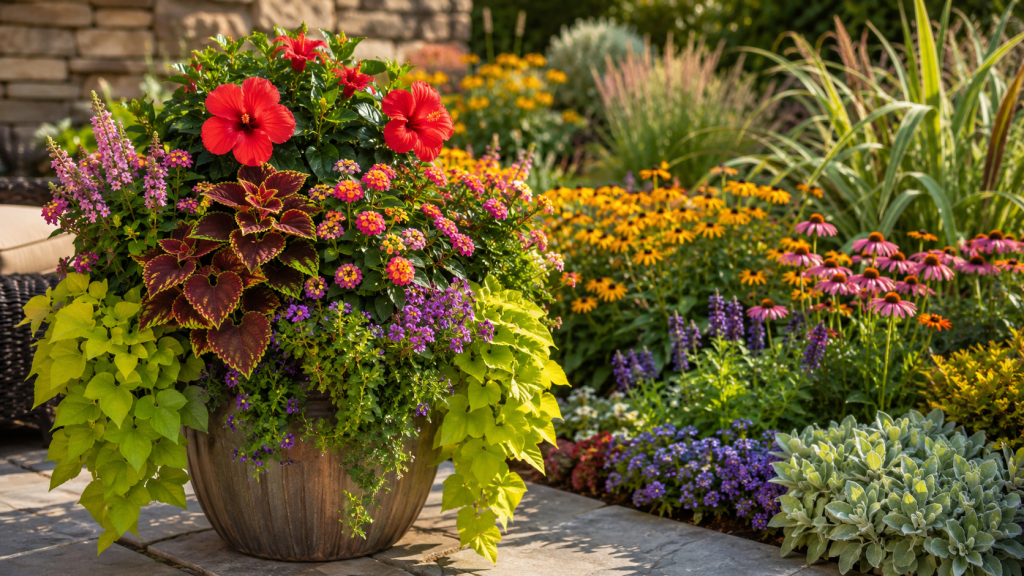
For containers, consider combining upright plants such as angelonia or celosia with trailing sweet potato vine, calibrachoa, or ornamental vinca vine. Removing spent flowers and giving plants a light feeding can also help encourage another round of blooms.
Perennials for Late-Summer Color
Late summer is an important season for many perennials. Black-eyed Susans, coneflowers, sedum, coreopsis, garden phlox, Russian sage, and perennial hibiscus provide fresh color just as earlier bloomers begin to fade.
These plants also help support bees, butterflies, and other pollinators when fewer nectar sources may be available. Planting now gives them time to begin establishing roots before winter, provided they receive consistent watering.
Add Color with Foliage
Flowers are not the only way to brighten the landscape. Coleus, ornamental grasses, heuchera, sweet potato vine, dusty miller, and variegated foliage plants provide dependable color even when they are not blooming.
Foliage is particularly useful in shaded areas, where flowering options may be more limited. Mixing burgundy, chartreuse, silver, and deep green leaves can make a container or garden bed feel completely renewed.
Bring in the Tropicals
Tropical plants thrive in summer heat and can quickly transform patios, porches, and pool areas. Hibiscus, mandevilla, canna lilies, elephant ears, crotons, and palms provide bold foliage and dramatic flowers.
Use one large tropical as the focal point of a container, then surround it with smaller flowering annuals or trailing plants. Tropicals can continue looking impressive until nighttime temperatures begin to drop.
Refresh Containers for the Rest of the Season
You do not always need to replace an entire container. Remove plants that are struggling, trim back anything overgrown, loosen the soil, and add a small amount of fresh potting mix. Then fill open spaces with colorful annuals, foliage plants, or compact perennials.
Regular watering remains essential during hot weather. Containers may need daily attention, especially during windy or sunny conditions. Water thoroughly until moisture drains from the bottom, rather than giving plants frequent shallow sips.
Late summer is a chance to give your garden a second season. Stop by Wyman’s Garden Center to explore heat-tolerant annuals, blooming perennials, tropical plants, colorful foliage, and everything you need to refresh your containers.
Frequently Asked Questions
Is it too late to plant flowers in late summer?
No. Annuals can provide immediate color through the remainder of the season, while perennials can begin establishing roots before winter. Newly planted flowers will need regular watering during hot weather.
What flowers handle full sun and heat best?
Lantana, vinca, angelonia, pentas, salvia, celosia, and zinnias are reliable annual choices. Coneflowers, black-eyed Susans, sedum, Russian sage, and coreopsis are strong perennial options.
How can I revive a tired container garden?
Remove dead or struggling plants, trim back overgrown growth, add fresh potting mix, and fill empty spaces with new annuals or foliage plants. A light application of fertilizer may help established plants produce fresh growth.
How often should containers be watered in late summer?
Check them daily. Containers in full sun may need water every day during hot weather. Larger pots usually retain moisture longer than small containers.
Can tropical plants stay outside into fall?
Yes, but watch nighttime temperatures. Many tropical plants begin to suffer when temperatures consistently fall below 50°F. Move them indoors or protect them before cold weather arrives.
What plants provide late-season color in shade?
Coleus, begonias, caladiums, heuchera, impatiens, ornamental grasses, and variegated foliage plants can add strong color to shaded containers and garden beds.